Membrane Vacuum Press Machine: Applications in Modern Furniture Manufacturing
As furniture design trends move toward complex profiles, curved edges, and consistent laminate finishes, membrane vacuum press machines have become an increasingly important part of modern furniture manufacturing. Unlike flat-bed pressing methods, membrane vacuum presses can wrap laminate or veneer tightly around three-dimensional and irregular surfaces, opening up design possibilities that flat pressing simply can’t achieve. This blog explains how the technology works and where it delivers the most value in furniture production today.
What Is a Membrane Vacuum Press Machine?
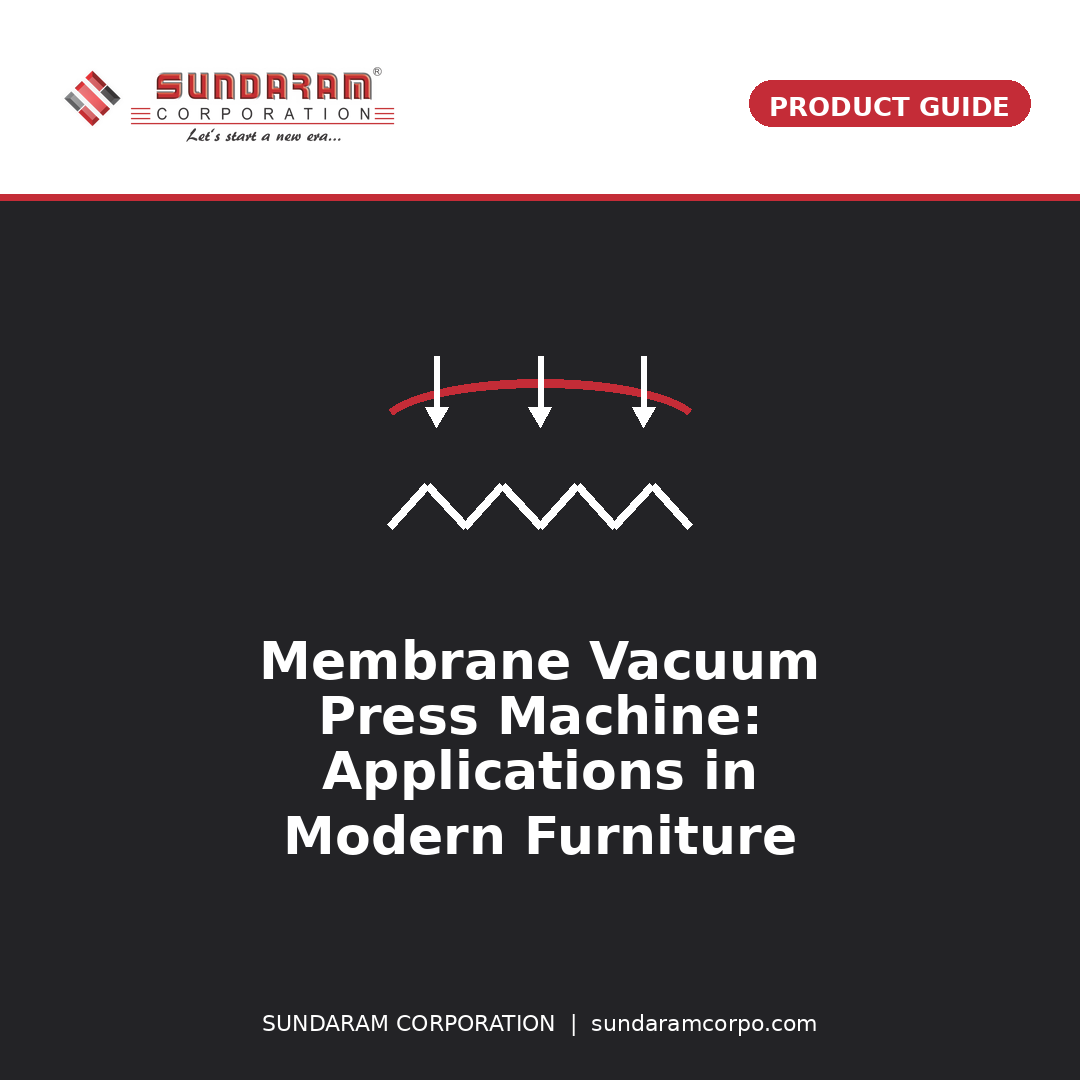
A membrane vacuum press uses a flexible membrane sheet and a vacuum system to press laminate, foil, or veneer material tightly onto a shaped substrate — including profiles, edges, and curved or recessed surfaces — creating a smooth, consistent finish that conforms precisely to the underlying shape.
How It Works
The substrate (typically MDF machined into the desired profile) is loaded onto the press bed along with the laminate or foil material. The flexible membrane is then lowered over the assembly, and a vacuum is drawn to pull the membrane — and the laminate beneath it — tightly against every contour of the substrate, while heat (in most systems) activates the adhesive for a strong, even bond.
Why This Matters for Modern Furniture Design
Contemporary furniture design increasingly favors profiled edges, routed patterns, and curved door fronts rather than simple flat panels. Flat-bed laminate pressing struggles to achieve a consistent finish on these shapes, often leaving bubbles, gaps, or uneven bonding around contours. Membrane vacuum pressing solves this by conforming the laminate precisely to the profile’s exact shape.
Key Applications in Furniture Manufacturing
- Profiled and routed cabinet doors requiring consistent laminate wrapping around edges and details
- Curved furniture panels and edges where flat pressing cannot achieve proper adhesion
- Modular furniture components with complex edge profiles
- Wardrobe and kitchen shutter manufacturing, where consistent finish quality across large production runs is essential
- MDF moulding and skirting profiles requiring a wrapped laminate or foil finish
Quality Benefits Over Traditional Pressing Methods
Because the membrane conforms tightly to every contour under vacuum pressure, manufacturers see fewer bonding defects — bubbles, lifted edges, or uneven adhesion — compared to flat-bed pressing on profiled substrates. This translates into higher first-pass yield and fewer rejected panels during quality inspection.
Production Efficiency Considerations
A single membrane press cycle can finish an entire profiled panel in one operation, compared to the multiple manual steps — cutting, wrapping, and hand-finishing edges — that profiled laminate work would otherwise require. This makes membrane pressing considerably more efficient for manufacturers producing profiled components at scale.
What to Look for in a Membrane Vacuum Press Machine
- Bed size compatible with your typical panel and profile dimensions
- Reliable, consistent vacuum pressure across the full bed area
- Heating system precision, since uneven heat can lead to inconsistent bonding
- Membrane durability and ease of replacement, since the membrane itself is a wear component
- Cycle time suited to your production volume requirements
Integrating Membrane Pressing Into Your Production Line
Membrane vacuum presses typically fit into a production flow after CNC routing or profiling of the substrate, and before final trimming and quality inspection. Manufacturers already running CNC routers for profiling are well-positioned to add membrane pressing as the next logical step in their finishing process.
About Sundaram Corporation’s Membrane Vacuum Press Range
Sundaram Corporation manufactures membrane vacuum press machines designed for consistent, high-quality laminate wrapping on profiled and curved furniture components, built to integrate smoothly with CNC routing and panel production equipment already common in modern furniture manufacturing lines.