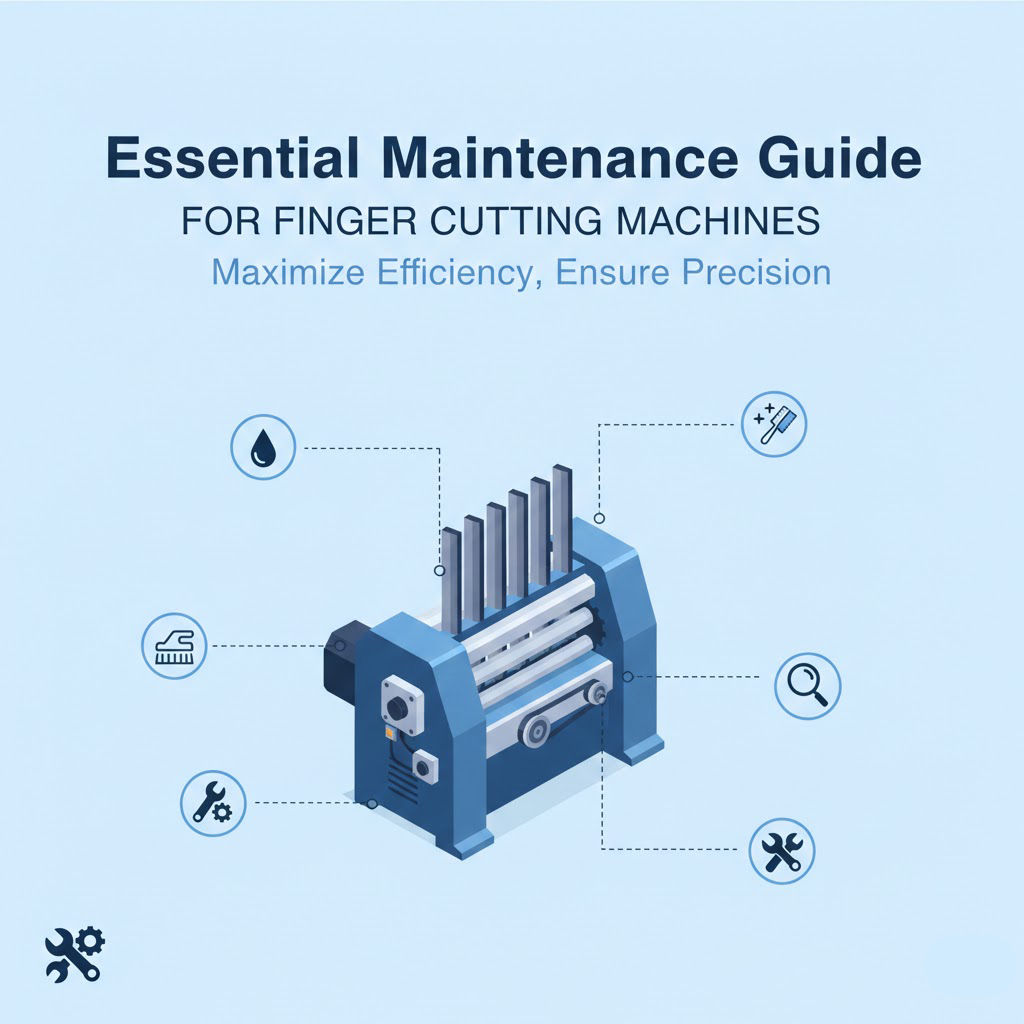
Essential Maintenance Guide for Finger Cutting Machines
A Finger Cutting Machine is a critical part of any finger joint production line. It ensures precise cutting of interlocking profiles that directly affect joint strength, alignment, and finish quality. Proper maintenance not only increases machine life but also improves cutting accuracy and reduces downtime.
This guide covers daily, weekly, and monthly maintenance practices to keep your finger cutting machine running at peak performance.
🔧 Why Maintenance Is Important
Regular maintenance helps:
- Maintain cutting precision
- Improve joint strength consistency
- Reduce cutter wear
- Prevent unexpected breakdowns
- Increase machine lifespan
- Lower repair costs
Neglecting maintenance can lead to misaligned joints, rough finishes, excessive vibration, and motor overload.
🛠 Daily Maintenance Checklist
1️⃣ Clean the Machine Thoroughly
- Remove wood dust, chips, and debris from cutter head and feed table.
- Clean guide rails and pressure rollers.
- Avoid letting dust accumulate near bearings and motor vents.
2️⃣ Inspect Cutter Blades
- Check for dull edges, cracks, or chipping.
- Replace or sharpen cutters when required.
- Ensure proper tightening of cutter head assembly.
3️⃣ Check Feed System
- Inspect feed rollers for smooth rotation.
- Remove resin or wood buildup from rollers.
- Ensure consistent feeding without slipping.
4️⃣ Electrical Inspection
- Check power cables and control switches.
- Ensure emergency stop button functions properly.
🔩 Weekly Maintenance Routine
✔ Belt & Chain Inspection
- Check for wear or looseness.
- Adjust tension according to manufacturer specifications.
✔ Lubrication
- Lubricate sliding guides and moving mechanical parts.
- Use recommended lubricant only.
- Avoid over-lubrication to prevent dust sticking.
✔ Alignment Check
- Verify fence alignment.
- Ensure cutting depth accuracy.
- Check table flatness.
🏭 Monthly Maintenance Schedule
🔹 Bearing Inspection
- Listen for abnormal noise.
- Replace worn bearings immediately.
🔹 Motor Check
- Inspect for overheating.
- Clean motor air vents.
- Check voltage stability.
🔹 Cutter Head Balancing
- Ensure cutter head is properly balanced.
- Unbalanced heads cause vibration and poor finish.
🔹 Fasteners & Frame
- Tighten bolts and structural supports.
- Check base stability to reduce vibration.
⚠ Common Problems & Solutions
| Problem | Cause | Solution |
| Rough Finger Cuts | Dull cutters | Sharpen or replace |
| Misaligned Joints | Fence misalignment | Recalibrate |
| Excessive Vibration | Loose bolts / bearing wear | Tighten or replace |
| Burn Marks on Wood | High feed resistance | Clean rollers & adjust speed |
| Uneven Depth | Improper depth setting | Re-adjust cutting depth |
🔒 Safety During Maintenance
- Always switch off and disconnect power.
- Use protective gloves and eye protection.
- Never clean cutters while machine is running.
- Only trained technicians should handle internal repairs.
💡 Pro Tips to Extend Machine Life
- Maintain a daily logbook.
- Use high-quality cutters for longer durability.
- Train operators for correct feeding techniques.
- Avoid overloading the machine with oversized wood.
- Schedule professional servicing every 6–12 months.