Common Cold Press Machine Problems and Their Solutions
Introduction
Cold press machines are essential equipment in the woodworking, furniture manufacturing, plywood, laminate, veneer, and panel processing industries. They are widely used to apply uniform pressure for bonding wood panels, laminates, veneers, MDF, particle boards, plywood, and other engineered wood products using industrial adhesives. A properly functioning cold press machine ensures strong bonding, consistent product quality, and efficient production.
Like any industrial machinery, cold press machines are subject to wear and tear, hydraulic issues, electrical faults, and mechanical failures. Without regular inspection and maintenance, these problems can reduce production efficiency, increase operating costs, and lead to poor-quality finished products.
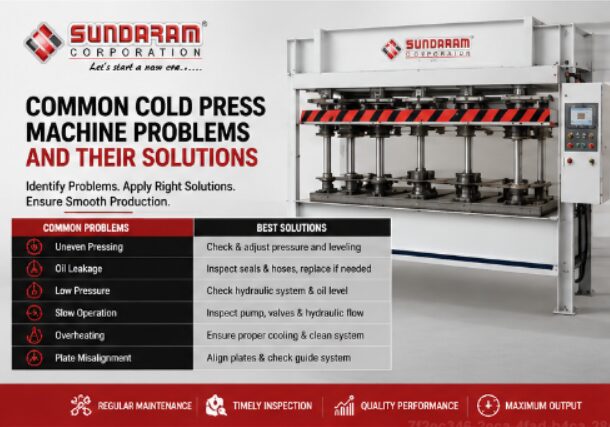
Understanding the most common cold press machine problems and knowing how to solve them can help manufacturers reduce downtime, improve product consistency, and extend the life of their equipment. This guide covers the major issues encountered in cold press machines, their causes, preventive measures, and practical solutions.
What Is a Cold Press Machine?
A cold press machine is a hydraulic pressing system that joins multiple layers of wood or engineered materials using pressure rather than heat. Unlike hot press machines, cold presses operate at room temperature and rely on adhesives that cure over time.
Cold press machines are commonly used for:
- Plywood manufacturing
- Veneer bonding
- MDF panel production
- Furniture manufacturing
- Door production
- Window frame assembly
- Decorative panel fabrication
- Laminated board production
Their ability to apply uniform pressure makes them ideal for producing strong, high-quality wood products.
Why Regular Maintenance Is Important
Routine maintenance plays a vital role in keeping a cold press machine operating efficiently.
Proper maintenance helps:
- Reduce unexpected downtime
- Improve hydraulic performance
- Increase machine lifespan
- Maintain consistent pressing pressure
- Improve product quality
- Reduce repair costs
- Enhance workplace safety
- Increase production efficiency
Preventive maintenance is always more cost-effective than emergency repairs.
Problem 1: Insufficient Hydraulic Pressure
One of the most common issues is low hydraulic pressure, which prevents the machine from applying adequate force during pressing.
Possible Causes
- Low hydraulic oil level
- Worn hydraulic pump
- Internal oil leakage
- Faulty pressure relief valve
- Air trapped in the hydraulic system
- Damaged hydraulic seals
Solutions
- Check and refill hydraulic oil.
- Inspect the hydraulic pump for wear.
- Replace damaged seals.
- Remove trapped air by bleeding the hydraulic system.
- Test and adjust the pressure relief valve.
- Repair leaking hydraulic lines.
Maintaining proper hydraulic pressure ensures strong adhesive bonding and consistent product quality.
Problem 2: Uneven Pressing Pressure
Uneven pressure across the pressing surface results in poor bonding and inconsistent panel thickness.
Possible Causes
- Misaligned press plates
- Worn hydraulic cylinders
- Uneven workpiece placement
- Damaged guide columns
- Frame distortion
Solutions
- Realign the press plates.
- Inspect hydraulic cylinders.
- Replace worn guide components.
- Position workpieces evenly.
- Check frame alignment periodically.
Uniform pressure is essential for producing high-quality finished products.
Problem 3: Hydraulic Oil Leakage
Oil leakage reduces system pressure while creating safety hazards.
Common Leak Locations
- Hydraulic hoses
- Cylinder seals
- Pump connections
- Valves
- Pipe fittings
- Hydraulic tank
Solutions
- Tighten loose fittings.
- Replace damaged hoses.
- Install new hydraulic seals.
- Repair leaking cylinders.
- Use manufacturer-recommended hydraulic oil.
Regular inspections help identify leaks before they become serious.
Problem 4: Slow Pressing Speed
A slow machine reduces daily production capacity.
Possible Causes
- Dirty hydraulic filters
- Low oil level
- Pump wear
- Hydraulic valve restrictions
- Internal leakage
Solutions
- Replace clogged filters.
- Maintain proper oil levels.
- Service or replace the hydraulic pump.
- Clean hydraulic valves.
- Inspect the hydraulic circuit for restrictions.
Proper hydraulic maintenance restores normal operating speed.
Problem 5: Machine Fails to Reach Full Pressure
The press may stop before reaching the required pressing force.
Possible Causes
- Pressure valve malfunction
- Pump wear
- Hydraulic leakage
- Incorrect pressure settings
- Air in hydraulic lines
Solutions
- Adjust pressure settings.
- Replace faulty valves.
- Repair leaks.
- Bleed the hydraulic system.
- Test pump performance.
Consistent pressure is critical for strong adhesive bonding.
Problem 6: Excessive Machine Noise
Unusual noises often indicate developing mechanical or hydraulic issues.
Possible Causes
- Air inside the hydraulic system
- Worn bearings
- Loose fasteners
- Pump cavitation
- Lack of lubrication
Solutions
- Remove trapped air.
- Lubricate moving parts.
- Tighten loose bolts.
- Replace worn bearings.
- Service the hydraulic pump.
Ignoring unusual sounds may result in major equipment damage.
Problem 7: Overheating Hydraulic Oil
Excessive oil temperature reduces hydraulic efficiency and accelerates component wear.
Possible Causes
- Dirty oil
- Continuous heavy operation
- Cooling system failure
- Pump inefficiency
- Restricted oil flow
Solutions
- Replace contaminated hydraulic oil.
- Clean oil coolers.
- Inspect cooling fans.
- Maintain recommended operating cycles.
- Replace worn pumps if necessary.
Proper cooling extends hydraulic system life.
Problem 8: Press Plates Become Misaligned
Misaligned plates cause uneven bonding and dimensional inaccuracies.
Possible Causes
- Worn guide pillars
- Improper installation
- Mechanical impact
- Frame wear
Solutions
- Realign press plates.
- Replace damaged guide columns.
- Inspect machine structure.
- Perform regular alignment checks.
Accurate alignment improves finished product quality.
Problem 9: Hydraulic Cylinder Failure
Hydraulic cylinders generate the force required for pressing operations.
Signs of Failure
- Oil leakage
- Slow movement
- Pressure loss
- Uneven motion
- Incomplete pressing
Solutions
- Replace cylinder seals.
- Repair scratched cylinder rods.
- Inspect piston assemblies.
- Replace damaged cylinders when necessary.
Routine inspections prevent costly hydraulic failures.
Problem 10: Electrical Control Problems
Electrical faults can interrupt production and affect machine operation.
Common Issues
- Faulty switches
- Damaged wiring
- Loose electrical terminals
- Control panel failures
- Sensor malfunction
Solutions
- Inspect wiring connections.
- Replace defective switches.
- Tighten loose terminals.
- Test control circuits.
- Maintain clean electrical cabinets.
Electrical maintenance improves machine reliability.
Problem 11: Adhesive Bond Failure
Poor bonding is often mistaken for machine failure.
Possible Causes
- Insufficient pressure
- Incorrect adhesive application
- Uneven pressing
- Contaminated surfaces
- Inadequate curing time
Solutions
- Verify pressing pressure.
- Apply adhesive evenly.
- Clean bonding surfaces.
- Follow adhesive manufacturer’s curing recommendations.
- Ensure proper material preparation.
Good adhesive practices are essential for strong joints.
Problem 12: Worn Hydraulic Seals
Hydraulic seals gradually wear during continuous operation.
Symptoms
- Pressure loss
- Oil leakage
- Slow cylinder movement
- Reduced pressing force
Solutions
- Replace seals immediately.
- Use high-quality replacement parts.
- Inspect seal condition during routine maintenance.
Replacing worn seals restores hydraulic efficiency.
Problem 13: Contaminated Hydraulic Oil
Contaminated oil damages pumps, valves, and cylinders.
Sources of Contamination
- Dust
- Water
- Metal particles
- Seal debris
- Improper oil handling
Solutions
- Replace contaminated oil.
- Install new filters.
- Clean the hydraulic tank.
- Maintain proper storage for hydraulic fluids.
Clean oil significantly extends component life.
Problem 14: Machine Vibration
Excessive vibration reduces machine accuracy and accelerates wear.
Possible Causes
- Loose mounting bolts
- Uneven foundation
- Pump imbalance
- Worn bearings
Solutions
- Tighten mounting hardware.
- Level the machine.
- Replace worn bearings.
- Inspect rotating components.
Stable operation improves pressing precision.
Problem 15: Pressure Gauge Inaccuracy
A faulty pressure gauge can lead to incorrect machine settings.
Possible Causes
- Gauge damage
- Calibration errors
- Hydraulic blockage
Solutions
- Calibrate the gauge regularly.
- Replace damaged gauges.
- Inspect pressure lines for blockage.
Accurate pressure readings are essential for consistent production.
Problem 16: Rust and Corrosion
Cold press machines often operate in environments with varying humidity.
Areas Affected
- Press plates
- Guide columns
- Hydraulic fittings
- Machine frame
Solutions
- Clean the machine after use.
- Apply protective lubricants.
- Store equipment in dry conditions.
- Repair damaged coatings promptly.
Corrosion prevention improves equipment longevity.
Preventive Maintenance Tips
Regular preventive maintenance minimizes machine failures and improves operational efficiency.
Daily maintenance should include:
- Cleaning the press plates
- Inspecting hydraulic hoses
- Checking oil levels
- Verifying pressure readings
- Removing dust and debris
Weekly maintenance should include:
- Inspecting hydraulic cylinders
- Tightening fasteners
- Cleaning filters
- Checking electrical connections
- Inspecting guide columns
Monthly maintenance should include:
- Replacing worn seals if needed
- Inspecting hydraulic pumps
- Checking machine alignment
- Testing pressure accuracy
- Lubricating moving parts
Annual maintenance should include:
- Complete hydraulic system inspection
- Oil replacement
- Cylinder servicing
- Electrical system testing
- Structural inspection
- Professional calibration
A structured maintenance schedule helps avoid costly production interruptions.
Safety Tips During Maintenance
Safe maintenance practices protect both operators and equipment.
Always follow these guidelines:
- Disconnect electrical power before servicing.
- Release hydraulic pressure before repairs.
- Wear appropriate personal protective equipment (PPE).
- Use manufacturer-approved spare parts.
- Never bypass safety devices.
- Keep the work area clean and organized.
- Follow lockout/tagout procedures where applicable.
- Allow only trained personnel to perform maintenance.
Proper safety procedures reduce the risk of accidents while ensuring reliable machine performance.